


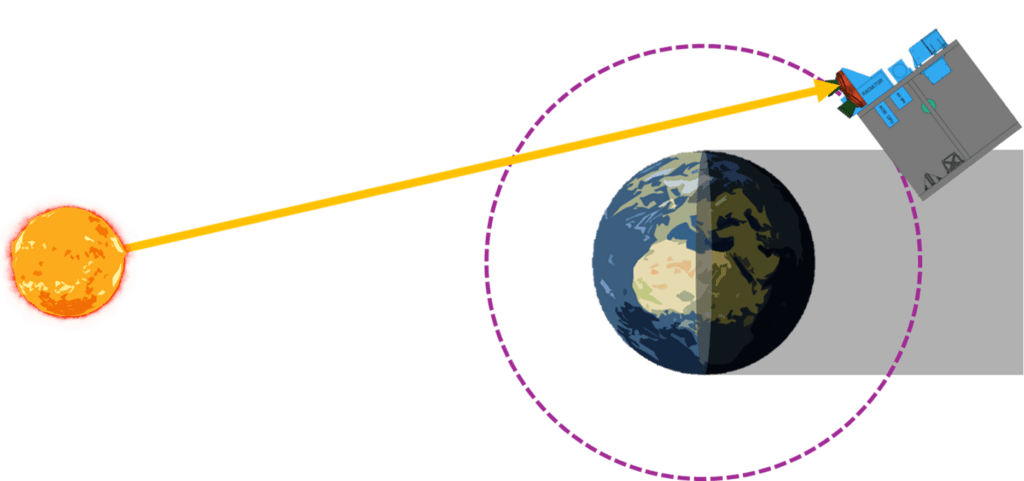
The AURORA Demonstrator its the first satellite of the AURORA mission is part of the European Space Agency’s (ESA) space security programme. The aim of this innovative programme is to develop and put into orbit a network of four satellites designed to monitor the entire auroral oval for the first time.
In collaboration with OHB Sweden and ESA’s Space Weather Office, the main objective of the mission is to continuously monitor the aurora borealis and aurora australis. For the first time, a complete image of the auroral oval will be obtained, making it possible to precisely quantify the total energy input to the magnetosphere and the Earth’s upper atmosphere due to solar activity. This mission will give us a better understanding of space weather conditions and enable us to anticipate their impact on human infrastructures, both in space and on the ground, such as power stations and aircraft in flight.
Thanks to the AURORA-D mission, France will strengthen its leadership in the field of space meteorology and unite a vast scientific community around this innovative project. This initiative will foster greater international collaboration and estimulate the development of new technologies and methods for observing this phenomena and it is a significant step towards better understanding of the space weather and its influence on the human life.

The AURORA project has two main stages:
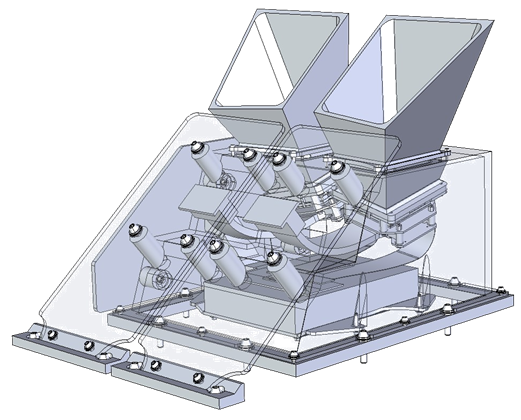
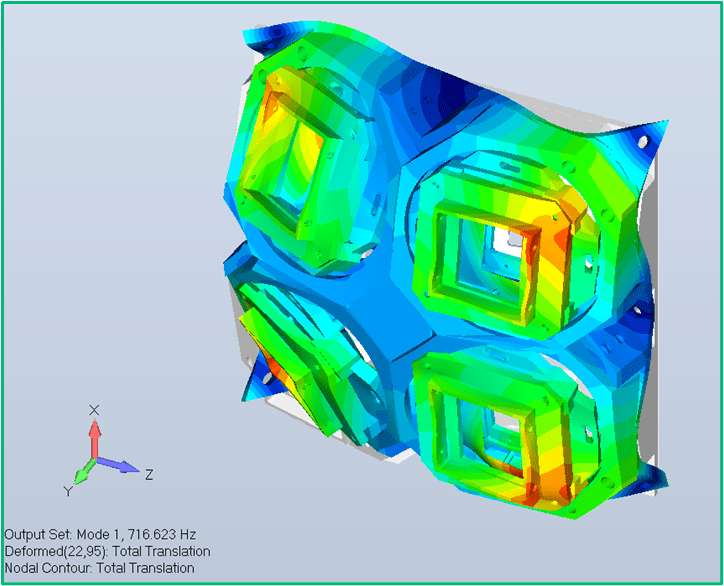
A major first milestone was reached in 2024 with the assembly and testing of the initial prototype of the AOSI instrument. In 2026, the teams will take things even further with a next-generation version, pushing the instrument’s performance to new heights.
Polar aurorae are crucial for understanding the magnetic field and solar impacts, which are essential for space and technological security.
Polar aurore result from the interaction between a stream of particles from the Sun and the Earth’s upper atmosphere. This flow collides with the gases in the magnetic field (often oxygen or nitrogen), producing flashes of light that fill the sky with coloured veils.
Monitoring the auroral oval is of the utmost importance, as it reflects one of the main energy inputs into the Earth’s atmosphere. Understanding and studying the phenomena associated with the aurora is important for space exploration and the safety of astronauts and spacecraft. This makes it possible to better understand their consequences and disturbances, and in particular to:
Observing the aurora helps us to better understand the interactions between the Sun and the Earth. They provide information about the Earth’s magnetic field and solar phenomena, which are crucial for our protection against potentially dangerous solar radiation.
The aurora borealis can have an impact on technology, because the solar storms that sometimes accompany them can disrupt power grids, satellite communications and navigation systems. By monitoring them, we can anticipate these storms and protect our technological infrastructures.


Polar aurorae result from the interaction between a stream of particles from the Sun and the Earth’s upper atmosphere. This flow collides with the gases in the magnetic field (often oxygen or nitrogen), producing flashes of light that fill the sky with coloured veils.
Monitoring the auroral oval is of the utmost importance, as it reflects one of the main energy inputs into the Earth’s atmosphere. Understanding and studying the phenomena associated with the aurora is important for space exploration and the safety of astronauts and spacecraft. This makes it possible to better understand their consequences and disturbances, and in particular to:
Observing the aurora helps us to better understand the interactions between the Sun and the Earth. They provide information about the Earth’s magnetic field and solar phenomena, which are crucial for our protection against potentially dangerous solar radiation.
The aurora borealis can have an impact on technology, because the solar storms that sometimes accompany them can disrupt power grids, satellite communications and navigation systems. By monitoring them, we can anticipate these storms and protect our technological infrastructures.
